

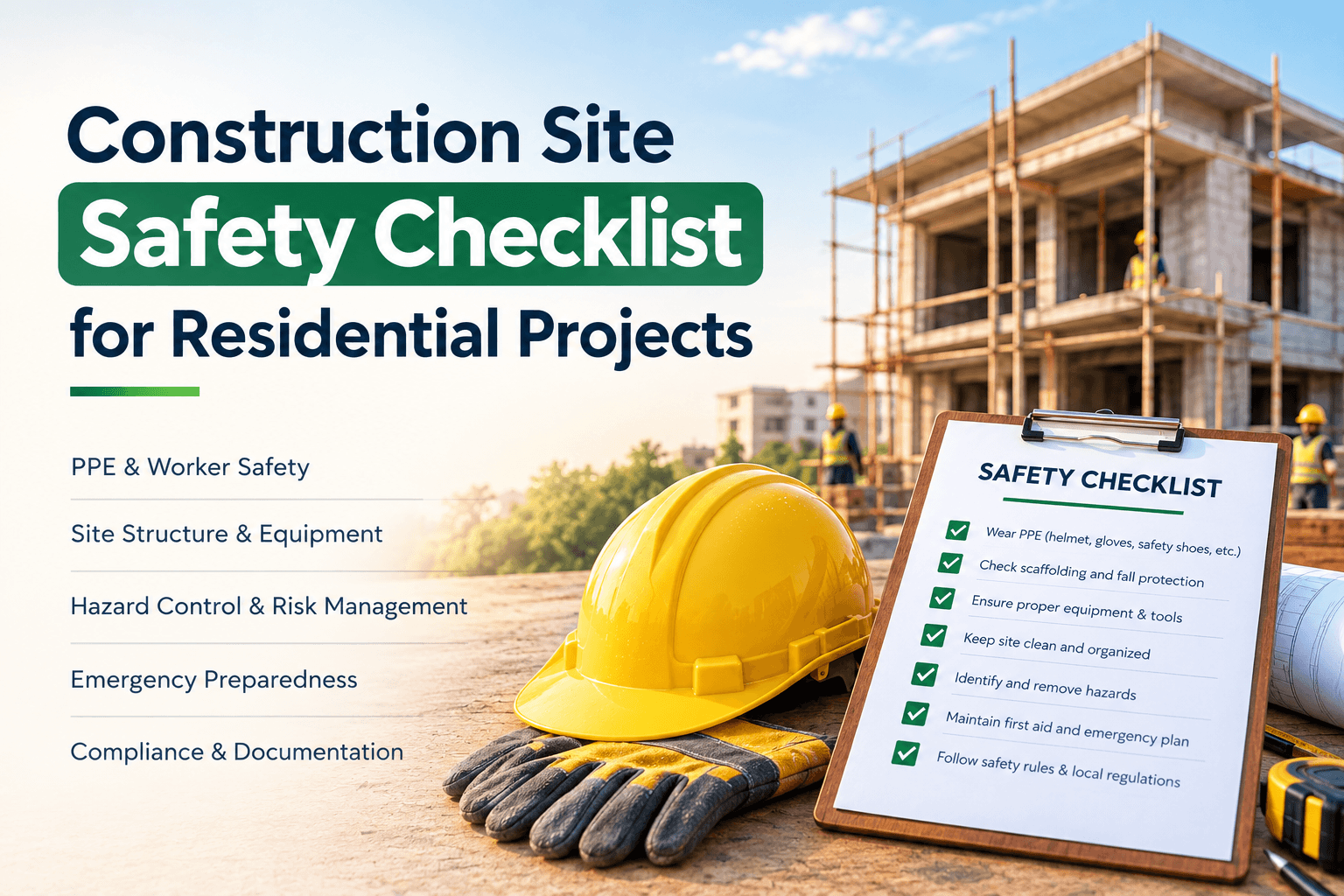
Construction safety is essential for protecting workers, contractors, visitors, and nearby residents during residential projects. A well-defined construction site safety checklist helps identify hazards, maintain safe working conditions, prevent accidents, and ensure that construction activities follow applicable safety requirements. Regular inspections and clear safety procedures support safer and more organised project execution.
What Is a Construction Site Safety Checklist?
A construction site safety checklist is a structured list of safety points used to inspect construction areas, equipment, work practices, and emergency arrangements. It helps site supervisors, contractors, and safety officers identify potential hazards before they cause injuries, property damage, or project disruptions.
For residential projects, the checklist covers personal protective equipment, scaffolding, electrical installations, machinery, excavation, housekeeping, and emergency preparedness. It also helps ensure that construction worker safety remains a priority throughout different stages of construction.
A checklist should be adapted to the project’s size, construction methods, site conditions, and applicable safety regulations. It should be used alongside worker training, risk assessments, and supervision rather than as a replacement for them.
Why Use a Construction Safety Inspection Checklist?
A construction safety inspection checklist helps project teams identify unsafe conditions systematically and take corrective action before an incident occurs. Regular inspections also make it easier to monitor compliance with construction safety rules and maintain accountability across the site.
Key benefits include:
- Early hazard identification: Helps identify damaged equipment, exposed electrical wires, unstable scaffolding, and other potential dangers.
- Improved worker protection: Encourages consistent use of personal protective equipment and safer working practices.
- Better compliance: Supports adherence to applicable occupational safety requirements and project-specific procedures.
- Reduced accidents and disruptions: Identifying hazards early can help prevent injuries, delays, and costly damage.
- Clear accountability: Inspection records help assign responsibility for resolving safety issues and tracking their completion.
- Improved site organisation: Encourages proper material storage, waste management, and clearly marked hazardous areas.
A checklist is most effective when inspections are performed regularly, findings are documented, and identified problems are corrected promptly.
Construction Site Safety Checklist: Key Areas to Inspect
1. Personal Protective Equipment (PPE)
Workers should use appropriate personal protective equipment based on the hazards associated with their tasks. Supervisors should verify that PPE is available, in good condition and used correctly.
- Safety helmets: Check that helmets are suitable for construction hazards and are not damaged.
- Safety shoes: Ensure workers wear protective footwear appropriate for impact, puncture, and slipping hazards.
- Gloves: Provide task-specific gloves for handling materials, tools, and other potentially hazardous substances.
- Safety glasses: Ensure suitable eye protection is used during cutting, drilling, grinding, and similar activities.
- High-visibility clothing: Make workers visible around vehicles, machinery, and active work zones.
- Harnesses where required: Check appropriate fall-protection equipment, connections, and anchor points before work at height.
2. Scaffolding and Working at Height
Scaffolding and elevated work areas should be inspected before use and after changes or conditions that could affect their stability.
- Stable scaffolding: Confirm that scaffolding is properly erected on a suitable foundation and is stable.
- Proper guardrails: Check that guardrails and other required edge-protection systems are installed.
- Safe access: Provide suitable ladders, stairways, or designated access points.
- Secure platforms: Ensure platforms are properly supported, secured, and free from excessive materials.
- Fall-protection systems: Verify that appropriate fall-arrest or fall-prevention measures are in place wherever required.
Workers should never use incomplete, unstable, or visibly damaged scaffolding.
3. Electrical Safety
Electrical hazards can cause electric shocks, burns, and fires. Electrical systems should be installed, inspected, and maintained by competent personnel.
- Properly maintained wiring: Check cables for wear, cuts, exposed conductors, and other damage.
- Protected electrical connections: Ensure connections are suitably insulated and protected against moisture and accidental contact.
- Grounding/earthing: Verify that electrical equipment and temporary installations have appropriate earthing and protective measures.
- Safe use of temporary electrical systems: Keep temporary power supplies organised and protected from site traffic, water, and physical damage.
- No exposed or damaged wires: Remove unsafe equipment from service and arrange repairs before reuse.
Appropriate isolation procedures should be followed before electrical inspection or repair.
4. Tools, Machinery, and Equipment
Tools and machinery should be suitable for their intended use and operated only by trained, authorised personnel.
- Regular equipment inspection: Check tools, lifting equipment, and machinery for visible damage or defects.
- Proper machine operation: Ensure equipment is operated according to manufacturer instructions and site procedures.
- Guards and safety mechanisms: Confirm that required machine guards, emergency stops, and protective devices are functional.
- Trained operators: Verify that operators have the necessary training and authorisation for the equipment they use.
- Maintenance record: Maintain inspection and servicing records according to equipment requirements.
Defective equipment should be clearly identified, removed from service, and repaired before being used again.
5. Excavation and Structural Work
Excavation and structural activities require careful planning because collapses, falling materials, and unstable structures can cause serious injuries.
- Safe excavation areas: Assess ground conditions and provide appropriate protection against excavation collapse.
- Barricades and warning signs: Restrict unauthorised access and clearly mark excavation zones.
- Structural stability: Check temporary supports, formwork, and structural elements according to approved methods.
- Safe access and exit: Provide suitable entry and exit arrangements for excavation and other restricted work areas.
- Protection from falling materials: Secure materials and prevent workers or visitors from entering areas exposed to falling objects.
Excavations and temporary structures should be assessed by competent personnel, particularly when ground conditions or structural loads change.
6. Housekeeping and Site Organisation
Good housekeeping helps prevent slips, trips, falls, and injuries caused by misplaced materials or construction waste.
- Clear walkways: Keep access routes, stairways, and emergency exits free from obstructions.
- Proper material storage: Store construction materials securely without blocking routes or creating unstable stacks.
- Waste removal: Remove debris, scrap materials, and waste regularly.
- Clean work areas: Keep workspaces organised and manage spills promptly.
- Clearly marked hazardous zones: Use suitable barriers and signs around dangerous work areas.
7. Fire and Emergency Safety
Every residential construction site should have suitable emergency arrangements that workers understand and can follow.
- Fire extinguishers: Provide appropriate, accessible extinguishers and ensure they are maintained.
- Emergency exits/routes: Keep designated evacuation routes clear and identify them clearly.
- Emergency contact numbers: Display relevant emergency contacts where workers can easily find them.
- First-aid kits: Maintain accessible, adequately stocked first-aid supplies.
- Emergency response procedures: Establish procedures for fire, serious injuries, evacuation, and other foreseeable emergencies.
Workers should receive appropriate instructions and participate in emergency drills where required.
How to Conduct a Construction Safety Inspection
A systematic inspection helps site teams identify hazards, document findings, and verify that corrective actions have been completed.
- Walk Through the Entire Site: Inspect active work areas, access routes, storage zones, temporary structures, and common areas.
- Identify Visible Hazards: Look for unsafe conditions such as exposed wiring, unstable materials, unprotected edges, and blocked walkways.
- Check PPE and Worker Practices: Observe whether workers use appropriate protective equipment and follow safe work procedures.
- Inspect Equipment and Work Areas: Check tools, machinery, scaffolding, electrical systems, and other work areas according to their risks.
- Record Safety Issues: Document hazards, their locations, the inspection date, and any immediate protective measures taken.
- Assign Corrective Actions: Identify who is responsible for each issue and establish a suitable completion deadline.
- Reinspect After Corrections: Confirm that the hazard has been addressed effectively before allowing affected work to resume, where applicable.
How Can Residential Developers Improve Construction Site Safety?
Residential developers can improve construction site safety by establishing clear safety policies, appointing competent supervisors, training workers, and requiring contractors to follow documented safety procedures. Regular inspections, appropriate PPE, equipment maintenance, and effective emergency planning help maintain safer working conditions.
Developers should also assess risks before work begins, communicate hazards to workers, and coordinate activities between contractors. Unsafe work should be stopped when necessary, and corrective actions should be verified before operations resume. Maintaining inspection records and reviewing incidents can help teams identify recurring problems and strengthen safety practices throughout the project.
Why Construction Safety Matters for Homebuyers
Construction safety matters to homebuyers because it reflects how a residential project manages site operations, worker protection, and construction-related risks. An organised site with visible safety arrangements can indicate that the developer takes operational responsibilities seriously.
Homebuyers visiting a construction site should follow visitor instructions, wear any required protective equipment, and remain within authorised areas. They should never enter active work zones without permission or supervision.
Although good safety practices are important, they do not independently guarantee construction quality or legal compliance. Buyers should also review the developer’s track record, applicable project approvals, GujRERA registration, and relevant construction documentation when evaluating a residential project.
Conclusion
A comprehensive construction site safety checklist helps residential project teams identify hazards, protect workers and visitors, and maintain organised working conditions. Regular inspections covering PPE, scaffolding, electrical safety, machinery, excavation, housekeeping, and emergency arrangements are essential for effective site management.
Following construction site safety rules requires more than completing a checklist. Developers and contractors must provide appropriate training, maintain equipment, correct unsafe conditions, and ensure workers understand their responsibilities. Consistent attention to construction worker safety supports safer construction activities and contributes to responsible residential project development.
FAQs
1. What safety checklists are used at construction sites?
Common checklists cover personal protective equipment, scaffolding and working at height, electrical safety, tools and machinery, excavation, housekeeping, fire prevention, and emergency preparedness. The checklist should reflect the project’s activities and specific risks.
2. How to manage safety in a construction site?
Manage safety through risk assessments, worker training, suitable PPE, regular inspections, equipment maintenance, clear warning signs, emergency planning, and documented corrective actions. Competent supervision is essential for ensuring that safety procedures are followed.
3. What are the 5 types of safety signs in construction?
Five common categories of construction safety signs are
- Prohibition signs: Indicate actions that are not allowed.
- Warning signs: Alert people to potential hazards.
- Mandatory signs: Specify actions or protective equipment required.
- Safe-condition signs: Identify emergency exits, first-aid points, and safe routes.
- Fire-safety signs: Identify firefighting equipment and related facilities.
Colours, shapes, and sign requirements should follow the applicable standards and regulations.
4. How to maintain safety on construction sites?
Maintain safety by inspecting work areas regularly, providing appropriate protective equipment, keeping access routes clear, maintaining machinery, securing hazardous zones, and training workers. Record identified issues and verify that corrective actions have been completed.
5. How Can Residential Developers Improve Construction Site Safety?
Residential developers can improve safety by implementing site-specific safety plans, training workers, supervising contractors, inspecting equipment, maintaining emergency arrangements, and correcting hazards promptly. Regular reviews can help improve safety performance throughout construction.
6. What are the important safety rules for construction workers?
Important construction safety rules include wearing task-appropriate PPE, following authorised work procedures, using equipment correctly, avoiding unprotected heights, reporting hazards, maintaining clean work areas, and following emergency instructions. Workers should never operate equipment without the required training or bypass safety mechanisms.