
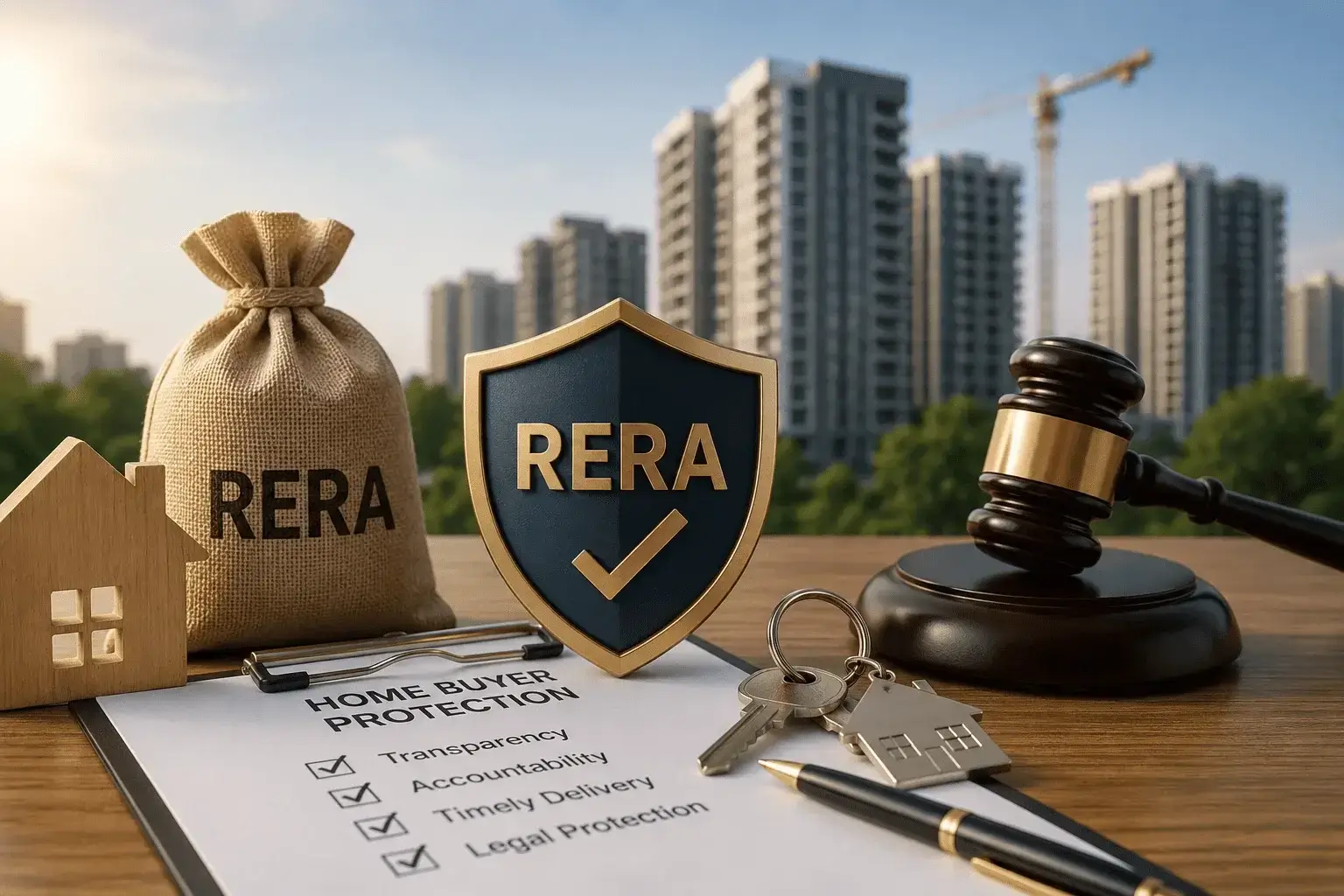
RERA protects homebuyers in Gujarat by improving transparency, regulating eligible real estate projects, requiring public disclosure of project information, protecting buyers against misleading claims and delayed possession, and providing legal remedies for violations. Through GUJRERA, homebuyers can verify project details and make more informed property decisions.
Introduction
Buying a home is one of the biggest financial commitments for Homebuyers in India. Before investing their savings, buyers need confidence that the project is legally registered, the promised specifications are transparent, and the developer follows the agreed timelines. The Real Estate (Regulation and Development) Act, 2016, commonly known as RERA, was introduced to bring greater transparency and accountability to the real estate sector. The Act provides a regulatory framework intended to protect the interests of homebuyers and establish mechanisms for dispute resolution.
In Gujarat, the Gujarat Real Estate Regulatory Authority (GujRERA) implements the RERA framework for applicable real estate projects. This gives buyers access to important project information and creates specific rights and remedies when promoters fail to meet their obligations.
What Is RERA and Why Is It Important for Homebuyers in India?
RERA is a central legislation created to regulate and promote the real estate sector while protecting consumers and improving transparency. It covers registration of eligible real estate projects and agents, promoter responsibilities, rights and duties of allottees, and mechanisms for addressing complaints.
For Homebuyers in India, RERA is important because it creates greater transparency before and after purchasing a property. Buyers can review information relating to registered projects, understand the commitments made by promoters, and seek remedies when applicable obligations are not fulfilled.
For buyers in Gujarat, checking RERA-approved residential projects through the appropriate state authority is an important part of the property-buying process.
How Does RERA Protects Homebuyers in Gujarat India
1. Mandatory Registration of Eligible Projects
RERA requires eligible real estate projects to be registered with the relevant Real Estate Regulatory Authority before they can be marketed and sold, subject to the exemptions provided under the law. This registration requirement helps bring applicable projects under regulatory oversight.
For buyers, this means checking the project’s registration details before making a purchase can provide important information about the promoter and the registered development.
2. Public Access to Project Information
RERA promotes transparency by requiring project-related information to be disclosed to the regulatory authority. Buyers can use the Gujarat RERA system to review information available for registered projects before making their investment decision.
This allows buyers to compare the information provided by the promoter with the details available in the registration record and make a more informed decision when considering RERA-protected properties.
3. Protection Against Misleading Advertisements
Under RERA, promoters have obligations regarding the accuracy of advertisements and prospectuses. Section 12 addresses the promoter’s responsibility regarding the veracity of information provided through advertising or prospectuses.
This helps protect buyers from relying on materially incorrect representations when considering a property. Buyers should still compare advertisements, brochures, agreements, and registered project information before making a commitment.
4. Carpet-Area-Based Pricing
RERA defines and regulates the concept of carpet area for apartments, giving buyers a standardized basis for understanding the actual usable area of a home. The focus on carpet area helps reduce confusion caused by different ways of presenting apartment sizes.
For buyers comparing RERA-approved residential projects, checking the registered carpet area against the details mentioned in the sale documents is an important step.
RERA Protects Homebuyers Against Delayed Possession
1. Dual Option Remedy (Section 18): Withdraw from the project, Stay in the project
Section 18 provides remedies when a promoter fails to complete or is unable to give possession according to the terms of the agreement for sale. If the allottee wishes to withdraw, the promoter is liable to return the amount received along with applicable interest and compensation as provided under the Act. If the allottee does not wish to withdraw, the promoter is required to pay interest for every month of delay until possession is handed over, at the prescribed rate.
2. Standardized Penalty Interest
RERA provides for interest on delayed possession and also establishes a prescribed interest framework applicable under the Act and relevant state rules. This provides a regulatory basis for compensation relating to qualifying delays instead of leaving the issue entirely to informal negotiations.
3. 70% Escrow Account Requirement (Section 4)
Under Section 4(2)(l)(D), 70% of amounts realized from allottees for a real estate project are required to be deposited into a separate account maintained with a scheduled bank. The funds are intended to cover land and construction costs and are subject to conditions governing withdrawals.
In Gujarat, the RERA bank-account framework further regulates the handling of project collections. This mechanism is designed to reduce diversion of funds between projects and strengthen financial discipline.
4. Mandatory Advance Delay Notice
Timely communication is important when a project faces circumstances affecting possession. Buyers should carefully review the agreement for sale and project communications for information about possession timelines, extensions, and changes. Maintaining written communication also helps create a clear record if a dispute later arises.
5. Strict “Force Majeure” Limits
RERA recognizes force majeure in specific circumstances, but a promoter cannot automatically treat every delay as force majeure. Any extension or relief must operate within the applicable provisions of the Act and relevant rules.
This helps ensure that ordinary project delays are not automatically treated as reasons for indefinite postponement of possession.
5. Fast-Track Redressal & Recovery (Section 31)
RERA provides a formal mechanism for filing complaints. Under Section 31, an aggrieved person can file a complaint with the Authority or adjudicating officer, as applicable, for violations or contraventions of the Act, rules, or regulations.
What Rights Do Homebuyers Have Under RERA?
1. Right to Information
Homebuyers have rights relating to information about the registered project, including relevant project details and documents made available under the RERA framework. This helps buyers evaluate a property before and during the purchase process.
2. Right to Timely Possession
Where a promoter fails to give possession according to the agreement for sale, Section 18 provides remedies to the allottee, including withdrawal with applicable refund, interest and compensation, or interest for delay where the allottee chooses to continue with the project.
3. Right to Quality Rectification
RERA provides protections relating to structural defects and other defects covered under the Act. Buyers can therefore seek appropriate rectification where the statutory requirements are applicable.
4. Right to Form or Participate in an Association
Home buyers can form or participate in an association of allottees as provided under applicable law. Such associations can play an important role in representing common interests and coordinating with the promoter and relevant authorities.
What RERA Does Not Guarantee
RERA provides regulatory protection and legal remedies, but RERA Protects Homebuyers does not mean that every property investment is automatically risk-free. RERA registration does not guarantee that a project will always be completed exactly on its original timeline, nor does it replace independent legal and technical due diligence.
Buyers should still verify title documents, approvals, project specifications, agreements, financial commitments, and other relevant records before purchasing a property. RERA should be treated as an important layer of protection rather than a substitute for careful homebuyer due diligence.
RERA Homebuyer Checklist for Gujarat
- Verify the project on GUJRERA.
- Match the promoter’s name with the registration record.
- Check the possession date.
- Review sanctioned plans and approved amenities.
- Confirm carpet area and unit specifications.
- Read the agreement for sale before paying more than the permitted advance.
- Check title, encumbrance, permissions, and completion documents.
- Keep all payment and communication records.
- Visit the construction site.
- Seek independent legal and technical advice where needed.
Conclusion
RERA has significantly strengthened the regulatory framework for real estate transactions and provided important protections for Homebuyers in India. In Gujarat, GujRERA gives buyers a way to verify applicable registered projects and access important project information before making a purchase. From project registration and information disclosure to carpet-area transparency, delayed-possession remedies, financial safeguards, and complaint mechanisms, RERA creates greater accountability between promoters and buyers. However, buyers should continue to conduct their own legal and technical checks before investing.
For anyone considering RERA-protected properties or RERA-approved residential projects in Gujarat, understanding these protections can make the homebuying process more transparent and informed.
FAQs
1. How does RERA protect homebuyers in India? RERA protects homebuyers through project registration requirements, information disclosure, promoter obligations, carpet-area transparency, remedies for delayed possession, and a formal complaint mechanism.
2. What are the key rights of homebuyers under RERA? Key rights include access to relevant project information, remedies for delayed possession, protections relating to specified defects, and the ability to form or participate in an association of allottees.
3. How does RERA protect against delayed possession of property? Under Section 18, eligible allottees can choose to withdraw and seek applicable refund, interest and compensation, or continue with the project and receive applicable interest for the period of delay.
4. How can I check whether a project is RERA-registered in Gujarat? Homebuyers can check the project’s registration details through the Gujarat RERA system and match the project and promoter information with the official registration record.
5. What is the 70% rule under RERA? The 70% rule requires 70% of amounts realized from allottees for a project to be deposited into a separate bank account, subject to the requirements of Section 4 and applicable rules. The funds are intended for land and construction costs.
6. Can a builder change the approved plan after booking? A promoter cannot freely make changes to sanctioned plans or project specifications. RERA places restrictions on changes, with certain alterations requiring the consent prescribed under the Act.
7. Does RERA registration guarantee that my property will be delivered on time? No. RERA registration does not guarantee that every project will be delivered on time. However, it establishes promoter obligations and provides remedies to eligible buyers when possession is delayed.